TRAINING & EDUCATION

Strengthen Your Leadership to Navigate Disruption and Growth

Executive Education equips business and institutional leaders with the tools to manage crises, make resilient decisions, and turn complex challenges into opportunities for sustainable performance and market expansion
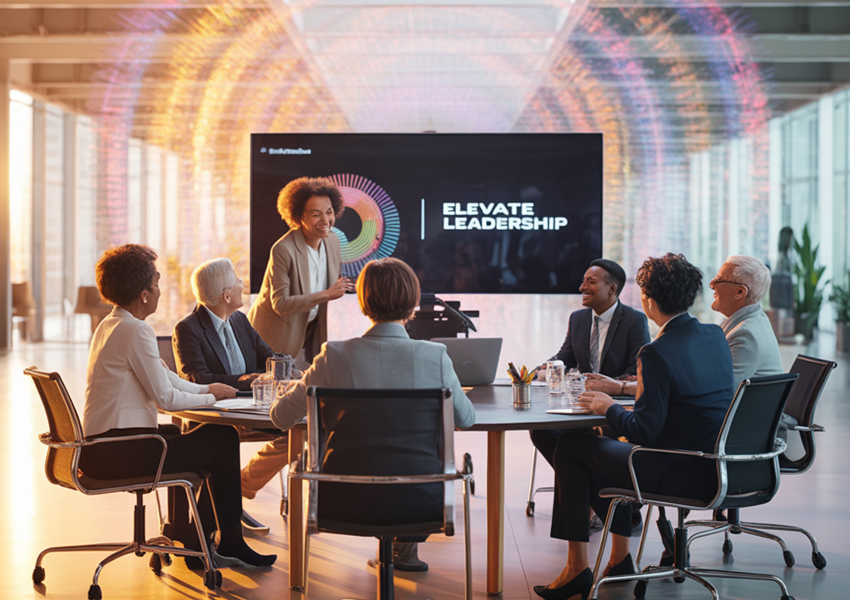

Emergency response planning team

Executives today are expected to do more than respond to crises—they must anticipate them, lead through them, and turn disruption into opportunity. Imara-IHG’s Executive Education programs are built for this reality, offering tailored learning experiences for senior leaders across sectors who are shaping the future of resilience.

Delivered through immersive workshops, cohort-based seminars, or private advisory formats, these programs focus on the intersection of strategy, leadership, and systemic risk. Topics include crisis decision-making, public-private collaboration, ESG integration, stakeholder trust, and business model adaptation. Sessions are led by globally recognized experts and customized to reflect the realities of your organization and industry.

Whether preparing your C-suite, strengthening your board’s oversight, or building internal champions for resilience, our Executive Education equips leaders with the mindset and tools to act decisively in the face of uncertainty.

Do You Need Urgent Support?

If you are responding to an unfolding disaster and urgently need real-time intelligence, situational analysis, or decision support, our team can help immediately. We provide rapid assessments, context scanning, and actionable insights so your organization can make informed, life-saving decisions under pressure.

Schedule an urgent resilience meeting
These Videos Matter!
They connect theory with practical resilience lessons drawn from real-world failures. And don't forget to check out our Resilience Hub !
Earthquake Alerts Explained. What Happens in the First 10 Minutes Before a Quake
David Wald
Technology in Disaster Management. What Helps, What Fails, and Why
Thomas Robertson
Technology in Disaster Response: What Works, What Fails, and Why
Noé Hatchuel
Beyond the Numbers: Applying Sphere Standards With Dignity and Judgment
Aninia Nadig

Explore Our Innovative Approach

Teams collaborating around holographic platform

Our Technology Platform

Our courses are delivered through cutting-edge technology, ensuring a seamless and intuitive online experience. We blend asynchronous flexibility with high-impact interaction—combining custom video lectures, live announcements, integrated simulations, and smart feedback systems powered by AI. Every tool we use is designed to support quick communication, fast grading, and deeper engagement, so that your learning experience feels personal, current, and connected from start to finish.

Team presenting analytics and dashboards

Our Proven Methodology

At Imara Academy, we don’t teach theory in a vacuum—we immerse you in the kinds of scenarios you’ll actually face in the field. Our signature simulation-based methodology places you in the center of complex, real-world challenges, allowing you to make decisions, collaborate across teams, and test ideas in dynamic, high-stakes environments. Whether you’re a student preparing for your first role or an executive refining your leadership strategy, our approach ensures that you don’t just understand concepts—you apply them with clarity and confidence.

Instructor guiding a blended online and onsite session

Your Learning Experience

Imara-IHG Academy offers a dynamic and immersive learning environment designed to empower individuals across all career stages. Through tailored programs, hands-on experiences, and a commitment to continuous growth, the Academy fosters both personal and professional development. Learners engage with real-world challenges, collaborative projects, and expert-led sessions that build confidence, capability, and leadership potential..

Corporate Disaster Resilience

Thrive at the Edge of Emergency and Aid Systems

In an age of compounding crises, resilience requires understanding how to anticipate, adapt, and lead in environments shaped by emergencies and humanitarian operations. You’ll learn how to align internal strategies with external systems—from local emergency management to global relief networks—and how to position your organization as a credible, prepared, and responsive actor.

Corporate Disaster Resilience

Decision-Making in Complex Systems

Business & Emergency Management Operations

In today’s volatile environment, your business doesn't operate in isolation—it intersects with emergency management, humanitarian aid, and peacebuilding systems more often than you realize. This lab equips you to navigate those intersections with clarity and purpose. You'll learn how to identify entry points into multi-actor coordination spaces and build strategies that align profit with impact.

Sensitive Management Image

Global Disaster Response

The Dynamics of Post Disaster Action

When disaster strikes across borders, the international community mobilizes through a web of actors, protocols, and power dynamics. This lab offers a front-row seat to that process—helping you understand who leads, who funds, who acts, and how decisions are made. You’ll gain critical insights into coordination structures, global frameworks, and real-world case studies that shape international disaster response.

Global Disaster Response

The Origins of Humanitarian Response

The Forces that Shaped Humanitarianism

To lead in today’s humanitarian landscape, you need to understand how it came to be. This lab traces the historical roots of humanitarian response—from faith-based charity and the Geneva Conventions to the birth of the modern aid system. You'll examine how key events, ideologies, and institutions shaped today’s principles, practices, and power structures.

The Origins of Humanitarian Response

The Logic of Disaster Recovery

From Stabilization to Inclusive Rebuilding

Recovery is more than reconstruction—it’s a chance to reshape communities, institutions, and systems for the better. This lab explores the complex process of disaster recovery, from immediate stabilization to long-term rebuilding, with a focus on equity, governance, and resilience. You'll learn who leads recovery efforts, how funding is allocated, and what makes recovery inclusive or exclusionary.

The Logic of Disaster Recovery

International Humanitarian Architecture

Behind the Scenes of a Multi-Billion Dollar System

If you want to work within the global humanitarian system—or alongside it—you need to understand how it’s built. This lab introduces you to the key actors, coordination mechanisms, and decision-making processes that define international humanitarian response. You’ll explore how mandates, funding streams, and power dynamics shape operations on the ground, and how different organizations—from the UN to INGOs—interact in times of crisis.

International Humanitarian Architecture

Our Leading Experts in this Area

Rodrigo Mena, Ph.D.

Disaster Management in Fragile, Conflict and Vulnerable (FCV) settings. Deputy Director, Hague Humanitarian Studies Centre.

Volker Hüls, M.A.

Optimizing crisis preparedness and response. Head of Results and Learning, Danish Refugee Council

Frederick Spielberg, MPP

Humanitarian Action Consultant. Former Emergency Preparedness Advisor (UNICEF)

Carlos Mejia, M.A.

Independent Consultant on Organizational Development and Transformational Leadership. Former Executive Director for Oxfam Colombia

Fernando Aragón-Durand, Ph.D.

Expert in Disaster Risk Reduction, Climate Change Adaptation and International Development

Charilaos Mertzanis, Ph.D.

Professor of Finance, Abu Dhabi University

América Bendito, Ph.D.

Specialist in Disaster Risk Reduction (UNESCO); Expert in Multi-Hazard Resilience, Climate Action, Inclusive Sustainable Development, and Capacity Building.

Expert Insights